Hiring a certified electrician in los angeles ensures aging residential infrastructure safely accommodates heavy modern electrical loads. From vintage knob-and-tube replacements across century-old properties to modern subpanel installations for backyard accessory dwelling units, electrical work requires systematic safety audits, precise load calculations, and meticulous city permitting.
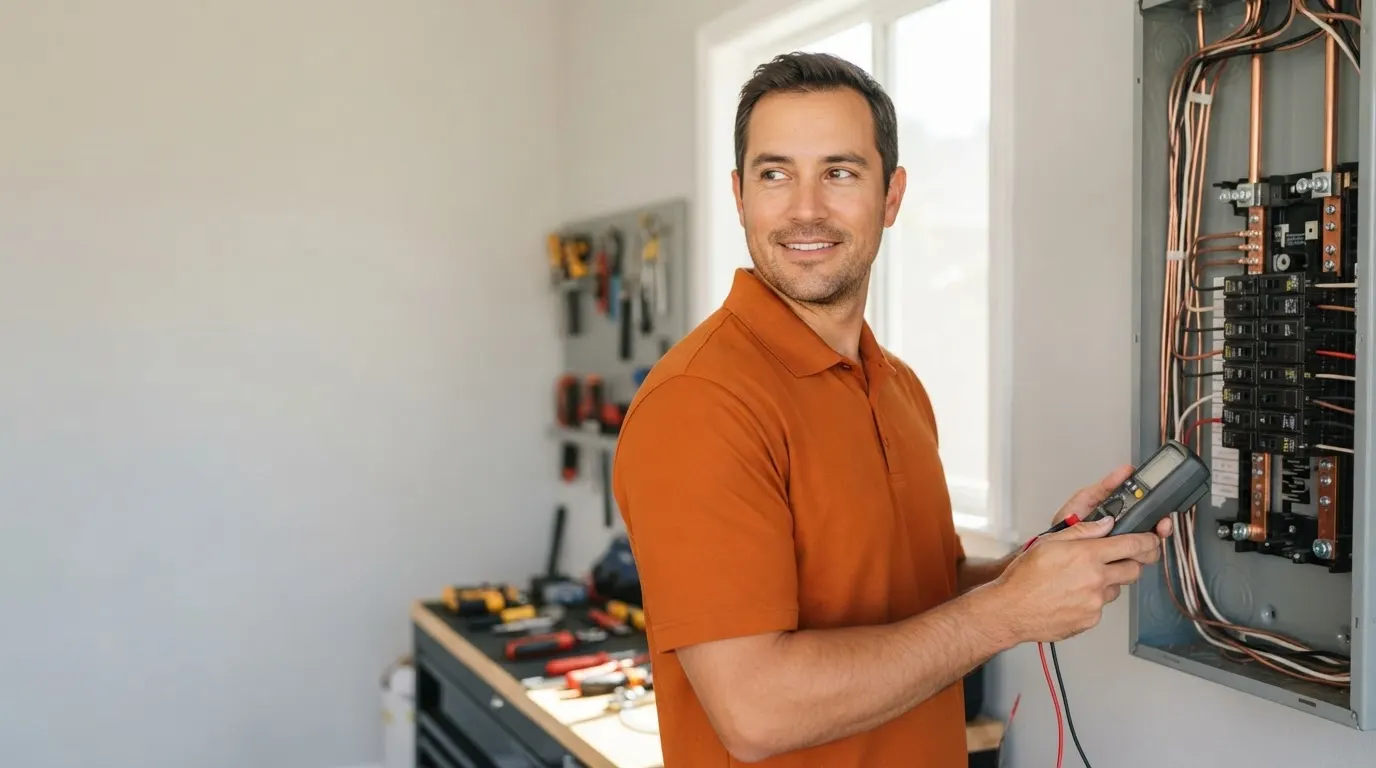
An electrician in los angeles is a licensed tradesperson who installs, tests, repairs, and maintains residential and commercial electrical systems in compliance with Title 24 and the National Electrical Code.
Every service reflects the same meticulous attention to detail, whether it's a single job or a larger electrician project across los angeles.
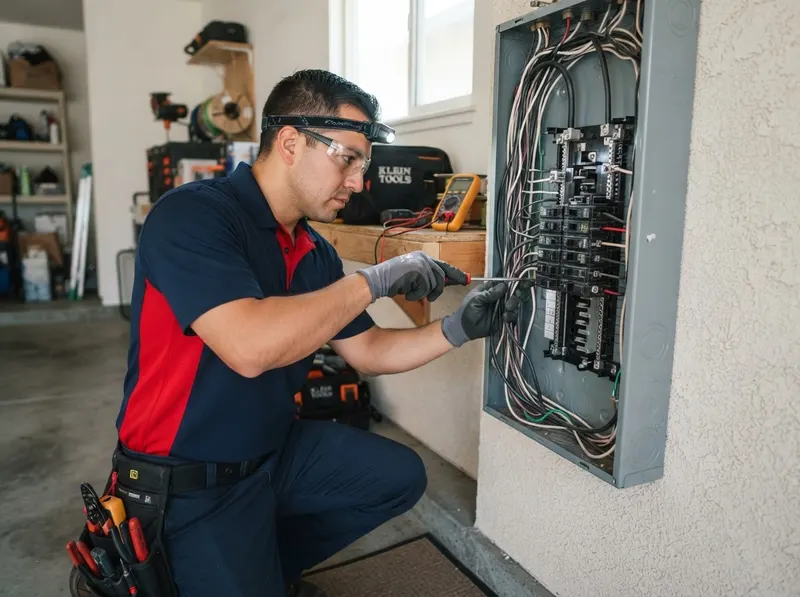
Replacing outdated 60-amp or 100-amp panels with 200-amp main service distribution enclosures provides the electrical capacity required for central heat pumps, induction cooking, and home battery systems. Work includes installing dual-pole main breakers, busbars, grounding rods, utility metering coordination, and pulling necessary LADBS electrical permits. BrightCore Electrical handles the complete structural evaluation, utility coordination paperwork, and precision grounding rod driving required by Title 24 standards. Many homes built before 1975 still operate obsolete split-bus panels, Zinsco enclosures, or Federal Pacific Electric Stab-Lok boxes, which fail to trip under sustained thermal overload. A modern 200-amp service panel upgrade introduces copper busbars, surge protection devices, and dedicated spaces for clean circuit expansion, ensuring heavy household electrical draws run continuously without voltage drop.
Get a quote →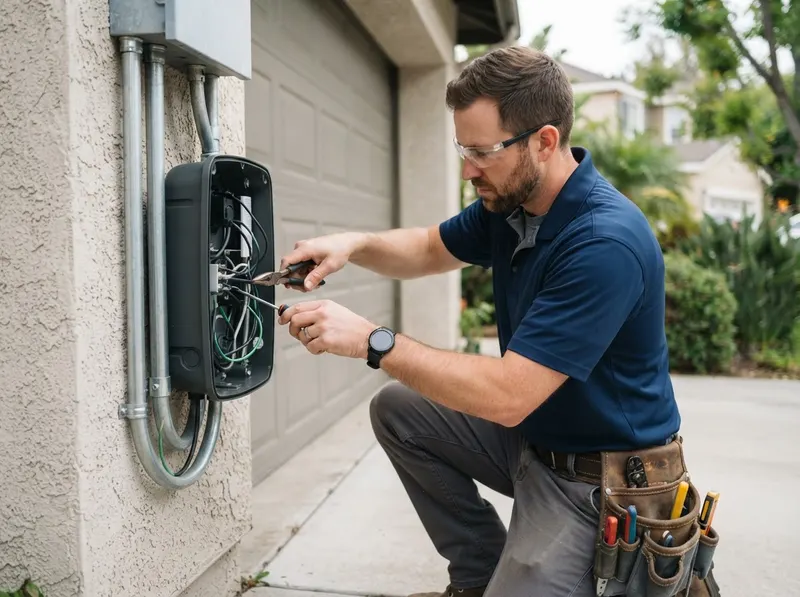
Dedicated 240-volt 40-amp to 60-amp branch circuit additions support wall-mounted electric vehicle chargers. Installations incorporate heavy-gauge copper conductors, hardwired industrial-grade disconnects or NEMA 14-50 receptacles, and dedicated dual-pole breakers matched to vehicle charging equipment specifications. Prior to physical routing, technicians execute a National Electrical Code Article 220 load calculation to ensure the dwelling main distribution system safely sustains an added continuous draw of 32 to 48 amps over six to eight continuous hours. Conduits are mounted cleanly along garage perimeters or trenched sub-grade to exterior parking pads using Schedule 80 PVC or rigid metallic conduit. Every vehicle charging station branch circuit installed by our team receives thorough ground-fault impedance verification and torque-calibrated terminal fastenings to resist thermal cycling degradation.
Get a quote →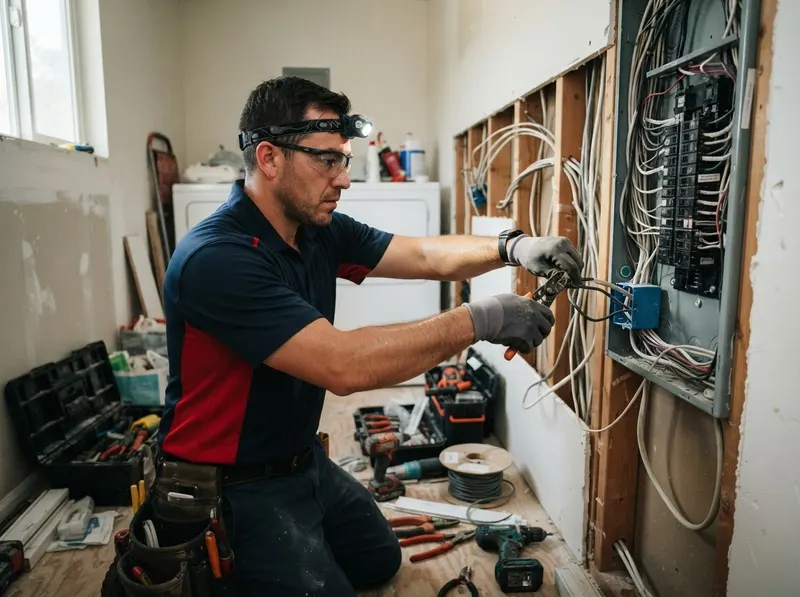
Systematic removal and replacement of obsolete knob-and-tube, cloth-sheathed, or ungrounded wiring with modern non-metallic sheathed Romex cable. New installations establish continuous copper equipment grounds throughout the structure, eliminating fire hazards and providing code-compliant grounding to all wall switches, outlets, and fixtures. Vintage properties often hide brittle rubber insulation, ungrounded junction boxes, and bootleg ground connections that pose acute shock hazards and void modern homeowner insurance policies. Our team systematically fishes fire-rated NM-B copper cabling through joist bays, foundation crawlspaces, and attic cavities, utilizing precision drywall openings to minimize structural and aesthetic impact. The full installation delivers dedicated neutral and ground paths, eliminating parasitic voltage leaks and safeguarding sensitive modern computing and home theater electronics.
Get a quote →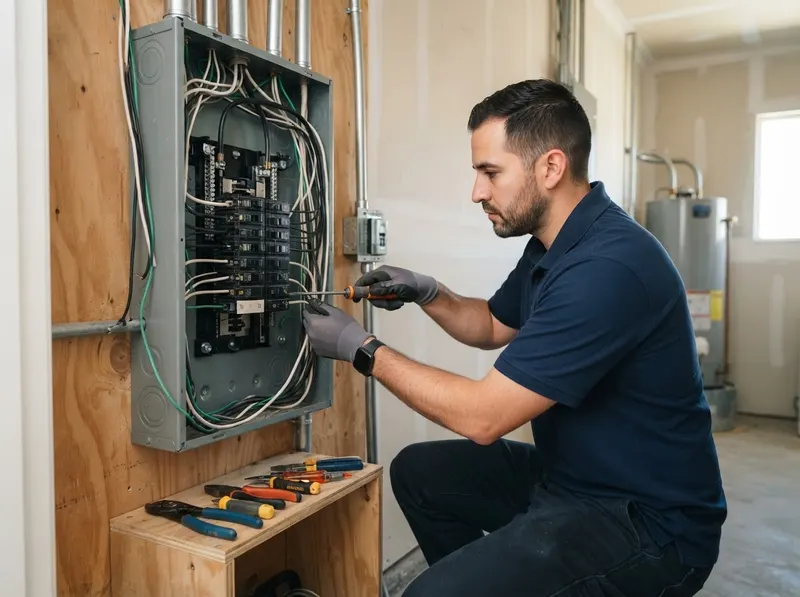
Secondary distribution subpanels expand available circuit capacity for accessory dwelling units, detached garages, workshops, and high-density home additions. Breaker enclosures include isolated neutral and ground busbars, dedicated supply feeders, and branch circuit breaker allocations to prevent main-board congestion. Installing a dedicated 60-amp to 125-amp subpanel provides localized circuit management, allowing homeowners to shut off power to specific functional zones without interrupting primary residential branch lines. BrightCore Electrical carefully balances phase loads between line 1 and line 2 on the primary distribution board, installing properly sized copper feeders housed inside metallic conduit runs to eliminate voltage drop over extended runs to detached structures.
Get a quote →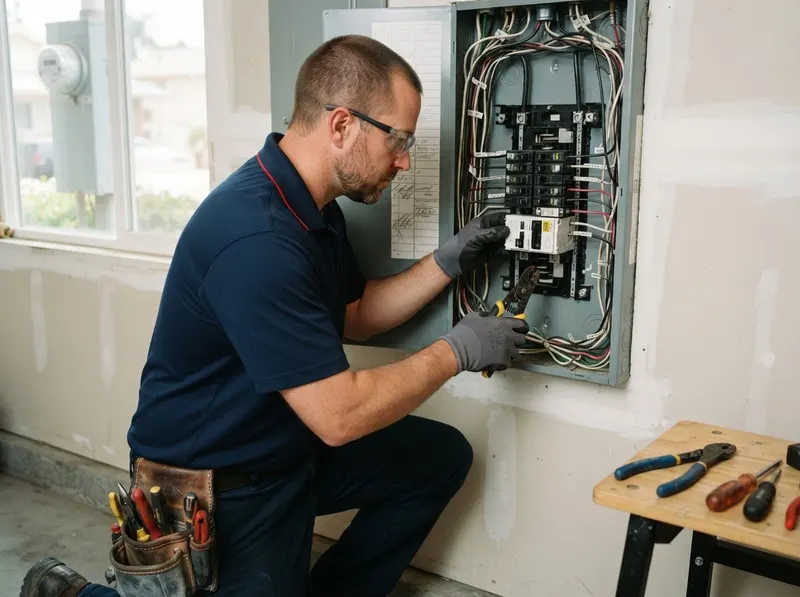
Installation of Arc-Fault Circuit-Interrupter and Ground-Fault Circuit-Interrupter breakers and receptacles guards living spaces against electrical fires and shock hazards. Modern dual-function protection shields bedroom, bathroom, kitchen, and exterior circuits according to modern Title 24 residential safety mandates. Standard thermal-magnetic circuit breakers only respond to prolonged overloads or dead short circuits; they cannot detect the intermittent low-current arcing generated by frayed lamp cords or loose terminal screws inside wall cavities. Dual-function circuit breakers analyze wave patterns to interrupt power within milliseconds of an arcing or ground-fault condition, stopping residential electrical fires before combustible framing ignites.
Get a quote →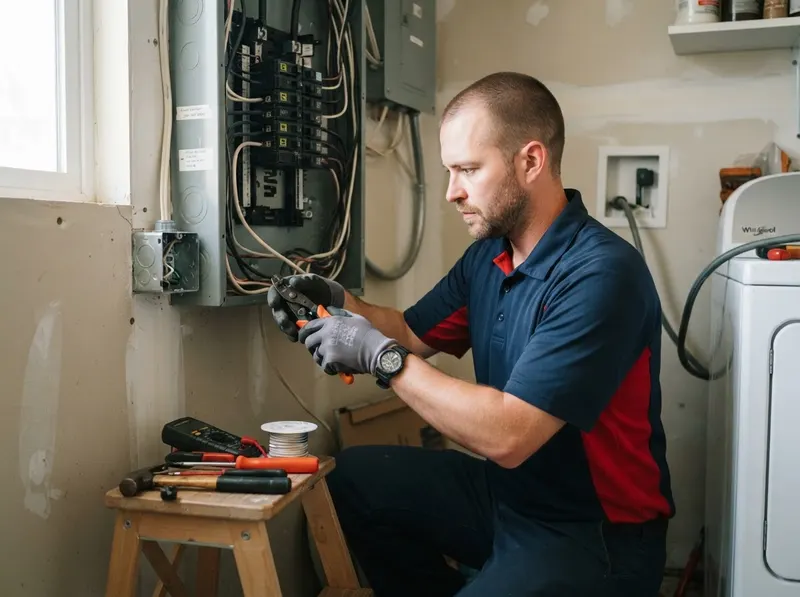
Individual branch circuit runs deliver isolated current paths for power-intensive residential equipment, including multi-ton heat pumps, water heaters, microwave ovens, sub-zero refrigeration units, and commercial-grade kitchen ranges. Isolated wiring eliminates cross-circuit flickering and prevents intermittent breaker trips caused by simultaneous inductive motor starts. Running dedicated 120-volt 20-amp and 240-volt 30-to-50-amp lines directly from the service panel ensures that large compressor units and heating elements receive steady voltage. This direct routing preserves the operational lifespan of expensive mechanical compressors and digital control boards while ensuring strict alignment with manufacturer installation specifications.
Get a quote →Precision ceiling layout, structural joist navigation, and wiring of IC-rated, airtight LED recessed lighting modules. Systems incorporate low-voltage electronic dimming switches, smart lighting controls, and dedicated junction housings to illuminate living spaces with optimal thermal efficiency. Vintage can lights often leak conditioned indoor air into unconditioned attic spaces and present ignition risks when contacting fiberglass insulation. Modern ultra-thin wafer fixtures and sealed recessed housings eliminate air leakage, operate at a fraction of the wattage, and interface with smart home automation platforms using shielded control wiring for flicker-free dimming.
Get a quote →Comprehensive diagnostic testing of distribution panels, grounding integrity, loop impedance, thermal hot spots, and breaker degradation. Systematic load audits identify overloaded phases, bootleg grounds, and code deficiencies across legacy electrical systems to ensure long-term residential safety. Technicians utilize calibrated infrared thermal imaging cameras to inspect interior panel busbars and terminal lugs under live household loads, uncovering invisible resistance heating before melting or electrical fire ignition occurs. The resulting diagnostic report establishes an actionable roadmap for addressing obsolete components, missing bonding jumpers, and ungrounded circuits.
Get a quote →You get a firm, itemized quote for your electrician before any work begins, no surprises, no pressure.
Careful prep, tidy work, and a full cleanup when we are done. We treat your home and belongings like our own.
The same trusted, background-checked team from the first call to the final check.
Selecting appropriate electrical service depends on property age, current ampacity, and planned future power demands. If lights flicker when central air conditioning or kitchen appliances activate, choose a comprehensive whole-home load calculation and panel diagnostic to confirm total current draw; if adding a Level 2 electric vehicle charging station or an induction range to a legacy home, choose a 200-amp service panel upgrade to prevent primary breaker trips. The trade-off is higher initial capital investment and planned utility disconnect downtime versus the acute risk of breaker failure, thermal degradation, and uninsurable electrical fires.
For older residences operating with ungrounded cloth wiring or legacy fuse boxes, complete whole-home rewiring provides permanent ground-fault protection across every room, whereas installing isolated dual-function AFCI/GFCI breakers on select high-draw circuits offers targeted branch protection. The trade-off centers on wall access and repair requirements versus leaving older junction points ungrounded behind finished lathe-and-plaster walls. Property owners constructing an accessory dwelling unit should choose a dedicated 100-amp feeder subpanel from the primary service drop rather than tapping into existing branch circuits, trading the cost of exterior trenching and conduit installation for isolated tenant metering and code-mandated fault containment.
When retrofitting exterior security and patio lighting, selecting dedicated low-voltage landscape transformers paired with photocells preserves main breaker space, whereas pulling standard 120-volt lines provides brighter illumination across sprawling grounds at the cost of conduit burial depth regulations that mandate an 18-inch trench. Similarly, homeowners debating between a hardwired Level 2 electric vehicle wall charger and a NEMA 14-50 wall receptacle must weigh charging speed against installation flexibility: a direct hardwired connection permits continuous 48-amp charging over a 60-amp dedicated breaker, while a plug-in receptacle is capped by electrical code at 40-amp continuous draw on a 50-amp breaker and requires an additional GFCI circuit breaker that can suffer nuisance tripping from vehicle onboard diagnostics.
Every project gets a firm, written price after a free on-site visit. Ranges below for orientation.
Tell us about your electrician job and we'll send a clear, written quote, usually the same day. Or just call and talk to a real los angeles pro.
(909) 271-7172
Across Los Angeles County, residential electrical requirements vary sharply based on regional architectural eras, local seismic factors, and extreme microclimates. Spanish Colonial, Craftsman, and mid-century residences in Los Feliz, Highland Park, and Hancock Park frequently rely on aging 100-amp services routed through original Zinsco, Federal Pacific, or split-bus distribution panels that cannot handle modern electrical heating and vehicle charging. In contrast, hillside construction near Elysian Park or canyon access roads toward Griffith Observatory often involves long utility service drops, overhead branch clearances over sloped roofs, and complex grounding rod placement due to shallow bedrock. Venice and coastal pockets deal with salty, humid marine air that accelerates busbar oxidation and surface corrosion in exterior meter sockets, demanding weather-sealed NEMA 3R enclosures with corrosion-resistant lugs. Furthermore, intense summer heat spikes across the San Fernando Valley into Studio City create extreme continuous loads on central air conditioning circuits, demanding verified load calculations and LADWP-compliant meter clearances to prevent transformer blowouts. Winter atmospheric river seasons across Southern California repeatedly expose unsealed exterior service mast penetrations and degraded underground feeder conduits, triggering urgent demand for ground-fault isolation, main breaker water mitigation, and exterior junction box resealing across mature hillside neighborhoods.
Free estimates for los angeles & the surrounding area.
 BrightCore Electrical